Alexandria has a rich history as a center of trade, culture, and learning. Its fame lasted into the Middle Ages, thanks to the influence of Hellenistic civilization. The library and lighthouse have become immortal symbols of this important metropolis.
The city is named after a great ruler. Alexander the Great It was founded in 332 BC, immediately after the start of his Persian campaign. It was intended to be the capital of the Egyptian empire and a naval base. After the death of Alexander the Great, the city came under the administration of Ptolemy I Soter. It is beginning of the new Ptolemaic dynasty It took only a century after its founding for Alexandria to become one of the largest and most important cities in the Mediterranean.
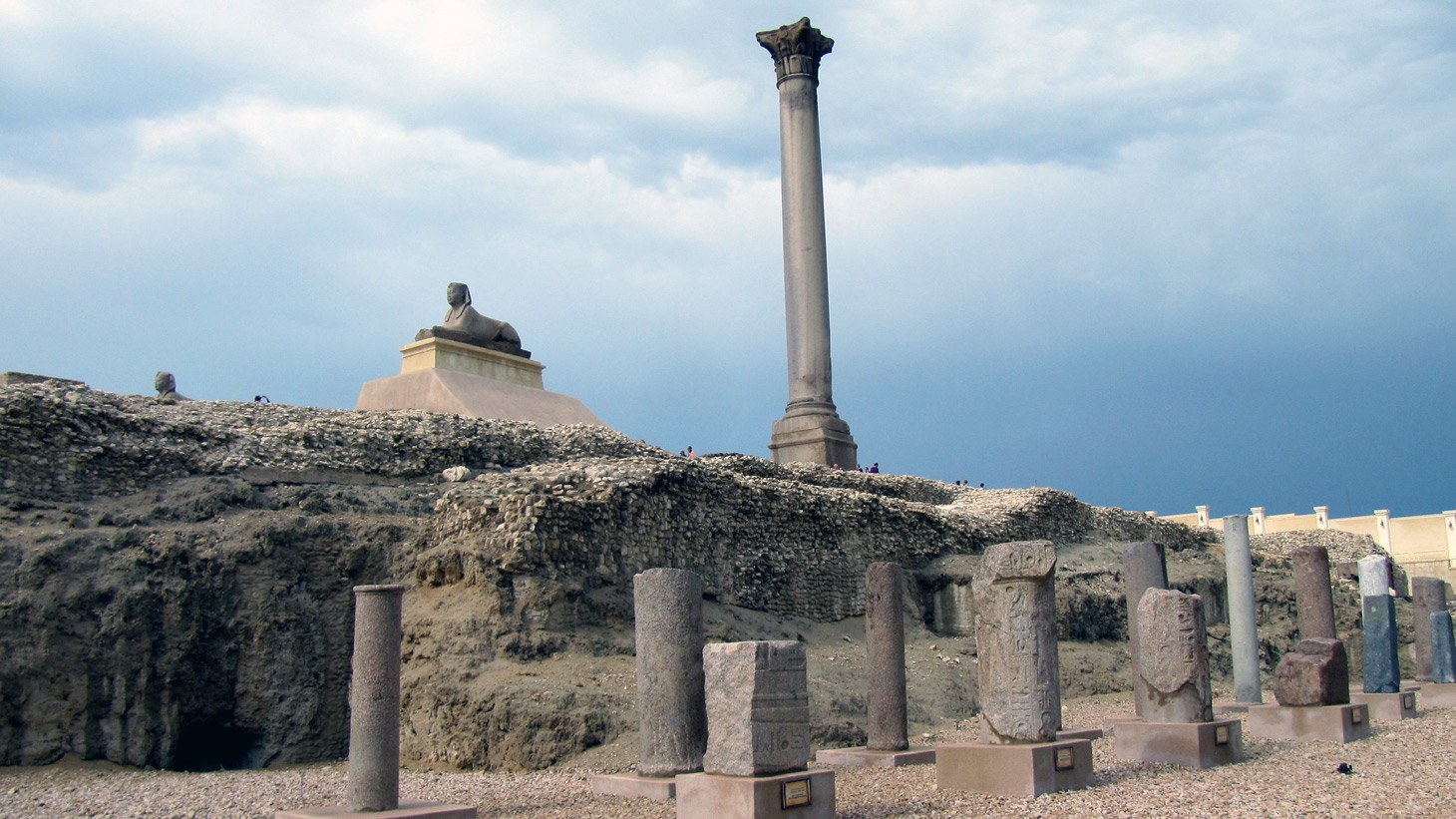
Alexandria in the Greek period was also notable for being a center of Greek learning and science. Euclid, Archimedes, Plotinus, and Eratosthenes were among the prominent scholars who studied at the Musaeum, a research institute founded in the early 3rd century BC. It was here that the famous Library of Alexandria, including Serapeion, where writings that no longer fit in the main library were sent.
In Alexandria, there were often clashes between different nations, as many nationalities and religious groups were represented there. An interesting fact is that this is where translation of the Old Testament from Hebrew into Greek In addition, Alexandria was also a center of Jewish scholarship.
The 2nd and 1st centuries BC saw the decline of the Ptolemies on the one hand and the rise of Rome on the other. Alexandria played a major role in the founding of the Roman Empire. The last ruler of the Ptolemaic dynasty was Kleopatra She was the mastermind behind the intrigues that were supposed to restore the family's wealth. However, as we already know, her efforts were in vain, and Alexandria and Egypt fell under Roman rule.
This period was also a time of cruelty, as evidenced by the actions of the Roman emperor Diocletian. In 303 had a large number of Egyptian Christians tortured to death He wanted people to worship only the emperor and not God. However, even this persecution of Christians could not stop the growing spiritual movement. The empire finally legalized Christianity under Emperor Constantine I. But even that was not the end of the religious disputes that created the conditions for Alexandria to fall first into the hands of the Persians (in 616) and then the Arabs (in 642).

Alexandria surrendered to the Arabs without resistance. Unfortunately, this did not protect it from the cruelty of the Arabs. Ugly acts were committed, especially against the Greek population. Since then, Alexandria has been influenced by political and cultural development of Islam Alexandria lost its leading position in politics. The city of Al-Fusṭāṭ (now part of Cairo) took first place, where the Coptic Patriarchate was transferred from Alexandria in the 11th century. Despite this, Alexandria remained an important commercial center and naval base.
In 1517, Egypt became part of Ottoman Empire, which destroyed the city's growth. Its great decline began. When Napoleon invaded Egypt in 1798, only a small Ottoman port remained of Alexandria.
As they say, every cloud has a silver lining. A new, large, and modern city could be built on the ruins. Alexandria's boom began in 1805. when Muhammad Ali became the Egyptian pasha. He sought to expand his own power and decided to use Egypt to do so. He built 72 km long canal, connecting Alexandria to the Nile (completed in 1820) and began manufacturing warships. The city became an economic opportunity for both Egyptians and foreign traders. This attracted new residents. Alexandria also became an important banking and commercial center.
From 1882 to 1922, the city was under British occupation. Nevertheless, it continued to prosper and expand. During World War I, the city became an important naval base in the eastern Mediterranean. In World War II, however, it played an even more important role, which was the reason for the repeated bombing of Alexandria. British forces left the city in 1946.
After 1946, Alexandria underwent significant changes and developments that transformed it into a modern city while preserving its historical significance. After Egypt gained independence from British rule in 1952, many industrial enterprises and infrastructure were nationalized, which affected Alexandria's economy. The city developed as key port and industrial center of Egypt.
In the 1970s and 1980s, the city underwent a period of modernization, including the construction of new roads, bridges, and the development of the coastal promenade. In 2002, Alexandria opened Bibliotheca Alexandrina, a modern version of the famous ancient library. Supported by UNESCO and other international organizations, this project symbolizes the cultural revival of the city and its determination to become a center of science, learning, and culture.