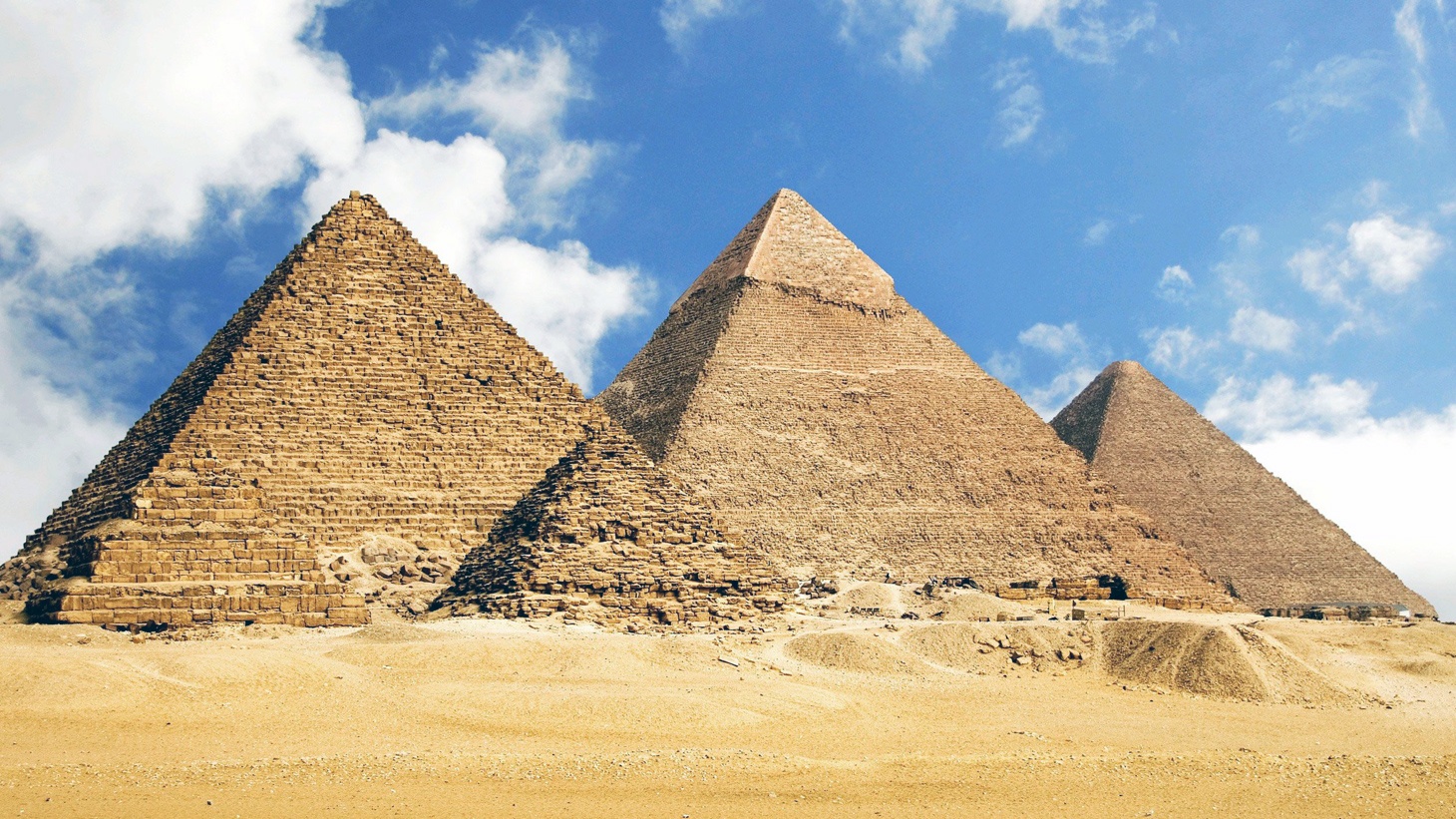
A vacation in Egypt wouldn't be complete without a visit to the famous pyramids of Giza. The pyramids of Khufu (Cheops), Khafre and Menkaure stand on the edge of Cairo and rank among the most iconic landmarks in the world. The Great Pyramid of Khufu is also the only one of the Seven Wonders of the Ancient World that is still standing today. You can even visit it on a day trip from Hurghada.
The pyramids were built around 2600–2500 BC, which makes them around 4,500 years old.
Getting there
Giza lies on the edge of Cairo, approx. 15 km from the center (Tahrir Square), 30–45 min by car outside rush hour.
Tickets
Entry to the site 700 EGP (approx. 285 CZK), students 350 EGP. Payment by card only (Visa/Mastercard); cash comes in handy for tips and camel rides.
The site
Open daily approx. 8 am–4 pm; allow 3–4 hours for your visit.
Inside the pyramids (extra)
Khufu 1,500 EGP (approx. 615 CZK), visit takes 1–1.5 hours including the queue. Khafre 280 EGP (approx. 115 CZK).
Prices and opening hours updated in November 2026. Converted to Czech koruna at 0.41 CZK per 1 EGP as of 23 November 2026.
It is a truly unique sight, which makes you realize how much work and effort must have gone into building these gigantic structures. If you visit Giza, you will be greeted by the sight of three enormous pyramids. Nearby is the majestic Sphinx, which was supposed to guard and watch over the entire pyramid complex. The view of the pyramids is even more impressive when you realize that they were built almost 2,500 years before our era.
When watching films and documentaries featuring pyramids, one gets the impression that they are hidden somewhere deep in the desert. If this is your impression too, you will probably be surprised to learn that this majestic work of the Egyptian people is located just a few hundred meters from modern urban development.

Cairo is a truly vast city, which has expanded over the centuries and absorbed the surrounding settlements. Over time, the capital also swallowed up Giza, and today the pyramids stand right next to this Cairo suburb. As these are truly gigantic structures, you will see their peaks while you are still on your way to the complex. Giza is about 15 kilometers from downtown Cairo and outside rush hour you can get there by car in 30–45 minutes, so it's easy to set off for the pyramids straight from the capital.
At the entrance to the site, you pay an entrance fee of 700 EGP (approx. 285 CZK), or 350 EGP for students. If you also want to see the interiors, you need to buy a separate ticket. Entry into the depths of the Pyramid of Khufu costs 1,500 EGP, and the Pyramid of Khafre 280 EGP (you'll find all prices in the quick overview). Tickets can only be paid by card; cash comes in handy for tips and camel rides.
Your spending can add up if you buy something from local vendors. They will try to sell you something from their range of souvenirs or put you on a camel and take your picture. Sometimes the encounter is pleasant, sometimes rather annoying, but you can always ignore them. Don't let anyone spoil your visit to the pyramids.
If you turn away from the pyramids, you will see urban development, which contrasts sharply with the desert and the beauty of the ancient architecture. The best view is from the Panoramic Point in the southwest of the site, where you can see all three pyramids lined up in a row. Shuttle buses run around the site, so you don't have to walk everywhere.
The number of tickets for the Pyramid of Khufu is limited each day and they sell out early, so arrive right at opening time or buy your ticket online in advance.
If you are interested in history or ancient Egypt, you have surely heard a lot about the pyramids. These ancient structures have become a favorite topic of various conspiracy theorists and mystery seekers. In addition to these groups, scientists and other experts cannot agree on many issues, which is why some information is often distorted or misleading. We will briefly present the main information that is generally accepted as the most likely.
The largest pyramid of the majestic trio is the Pyramid of Khufu (Cheops), also known as the Great Pyramid. The next in size is the Pyramid of Khafre, and the smallest (but still impressive) is the Pyramid of Menkaure.
In addition to the pyramids, you can see the magnificent Great Sphinx. The statue is truly monumental and is the largest statue in the world carved from a single piece of stone. Other structures near the pyramids include smaller tombs that belonged to Egyptian queens and members of the royal family.
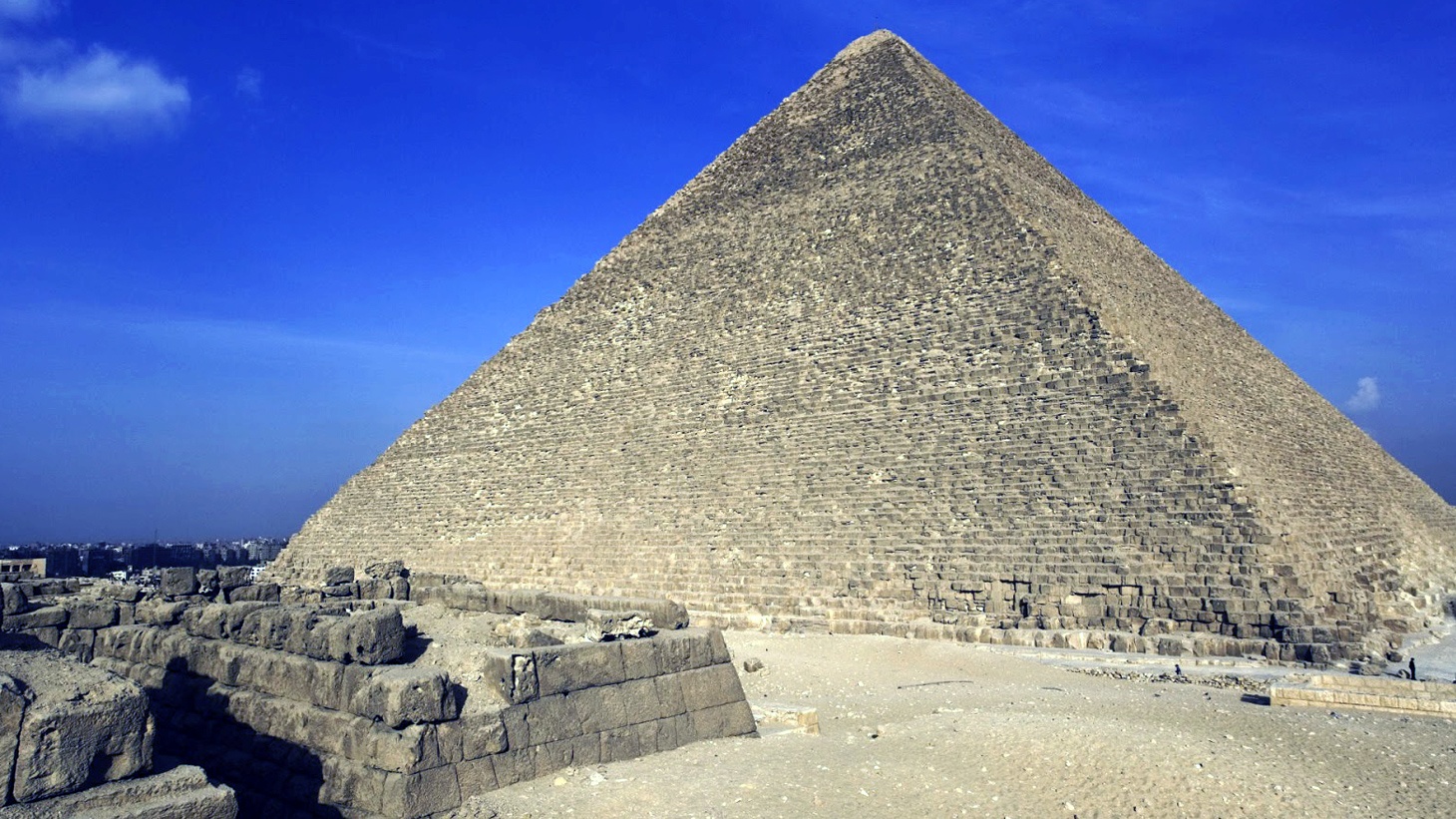
The Great Pyramid of Khufu is the largest pyramid in Egypt and also the largest known ancient structure. It was built as the tomb of the pharaoh Khufu (known in Greek as Cheops). Today the pyramid stands about 138 meters tall; originally it measured 146.6 meters. It lost several meters because its capstone disappeared and, over the centuries, so did the upper layers of stone along with the limestone casing.
The construction of this pyramid used approximately 2.5 million stone blocks, which had to be moved without modern technology, so the construction was extremely demanding. A single block weighed up to 2.5 tons. Construction took around 20 years.
The pyramid was not built by slaves but by paid Egyptian workers. This is shown by the workers' village near the pyramids and the workers' tombs. According to estimates by Egyptologist Mark Lehner, an average of around 13,000 people worked on it, with up to 40,000 at peak times. The often-quoted figure of 100,000 people comes from the ancient historian Herodotus and is now considered an exaggeration.

The precision with which the building stones were worked is also incredible. No binding material was used in the construction, and the individual blocks were simply placed tightly next to each other. The workmanship is so perfect that you would have trouble inserting a piece of paper between the individual blocks, such was the precision with which the ancient builders worked.
Inside the pyramid, there are numerous chambers and rooms that remain shrouded in mystery to this day and are constantly being explored by archaeologists and thrill seekers.
Not much is known about Khufu's reign, but it is believed that he was buried in the pyramid. Unfortunately, we cannot learn more about Khufu from the treasures that might have been found in the pyramid. It was robbed before archaeologists became interested in it. The structure hides three burial chambers. The main one conceals a huge stone sarcophagus, which must have been placed in the pyramid during its construction. Otherwise, it would have been impossible to get it into the interior of the pyramid.
Throughout history, many treasure hunters have tried to enter the pyramid, but all their expeditions ended in failure. Just finding the entrance seemed like a superhuman task. Everything changed when the Arab prince Abdullah al Mamun decided to discover the riches and treasures hidden inside the pyramid. However, he was unable to find the entrance, so he decided to dig a tunnel to the center of the pyramid. But he was unable to find any passageway that would lead him to the royal burial chamber.
However, the intervention in the pyramid attracted the local population, who began to chip away at the white limestone that had covered it in the past. Part of the original shell is now hidden in various buildings in the surrounding area.
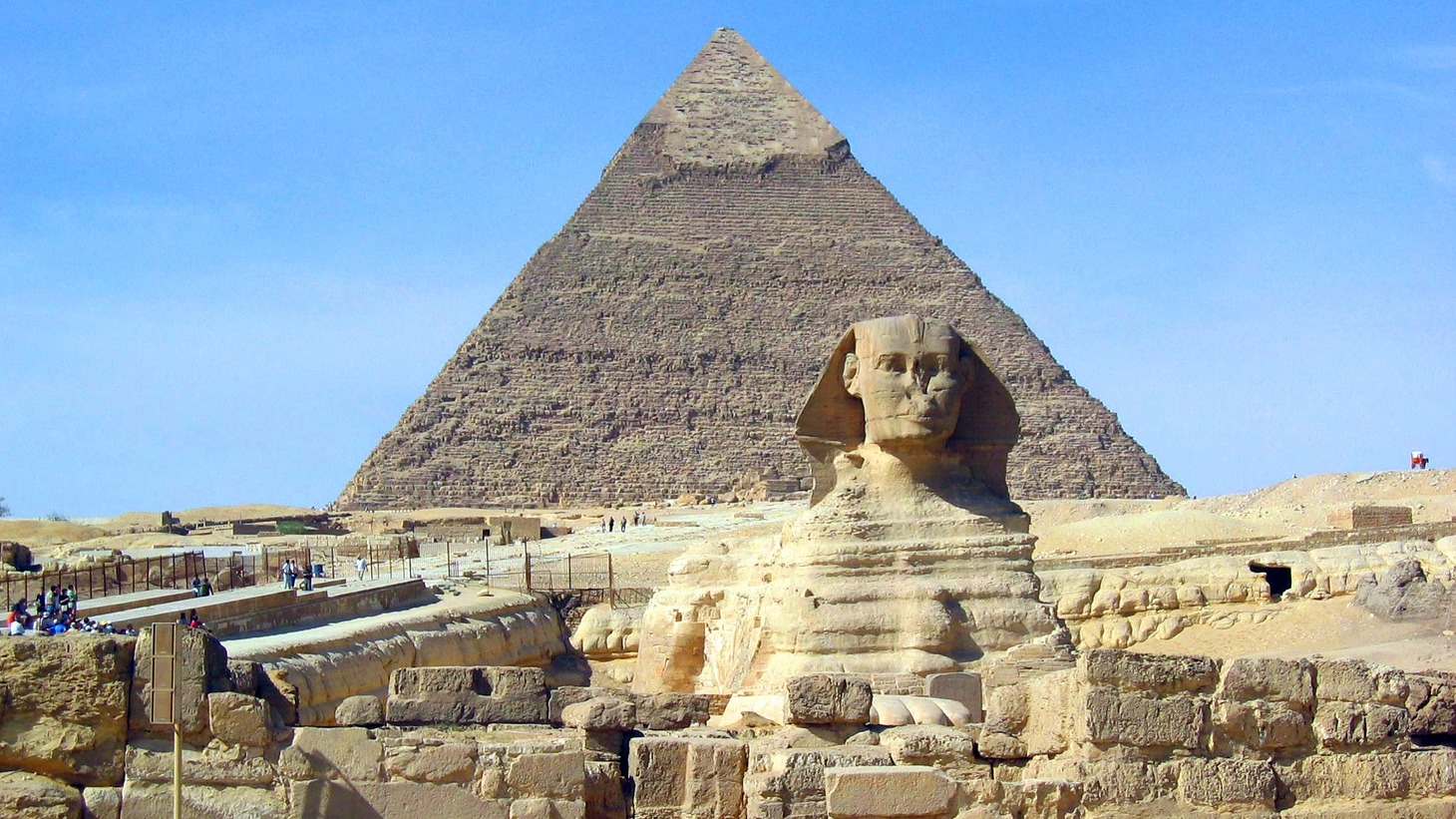
The second largest pyramid in the entire complex bears the name of King Khafre and today stands about 136 meters tall (originally 143.5 meters). If you stand in front of the pyramids, you will probably think that the Pyramid of Khafre is taller than the Pyramid of Khufu. This is because it stands on higher ground and has steeper sides than the Pyramid of Khufu. This fact confuses many tourists, and on social media you will find plenty of photos of tourists posing with what they believe to be the Pyramid of Khufu, which actually stands a few hundred meters away.

You can also tell them apart by their outer casing: the Pyramid of Khafre has a white tip. These are remnants of the former casing that once adorned all the pyramids. The tomb was probably built here by King Khafre and is still guarded by a huge sphinx, which has been lying in front of the pyramid itself for thousands of years.
The sphinx has the body of a lion and the head of a human and it will probably come as no surprise that it is supposed to be the head of Pharaoh Khafre. However, even in this theory, some researchers disagree, and many sources state that it depicts Khafre's father, Khufu.
The height of the Sphinx statue is 21 meters and there is constant debate about its age, but the prevailing opinion is that it dates back to the 3rd millennium BC.
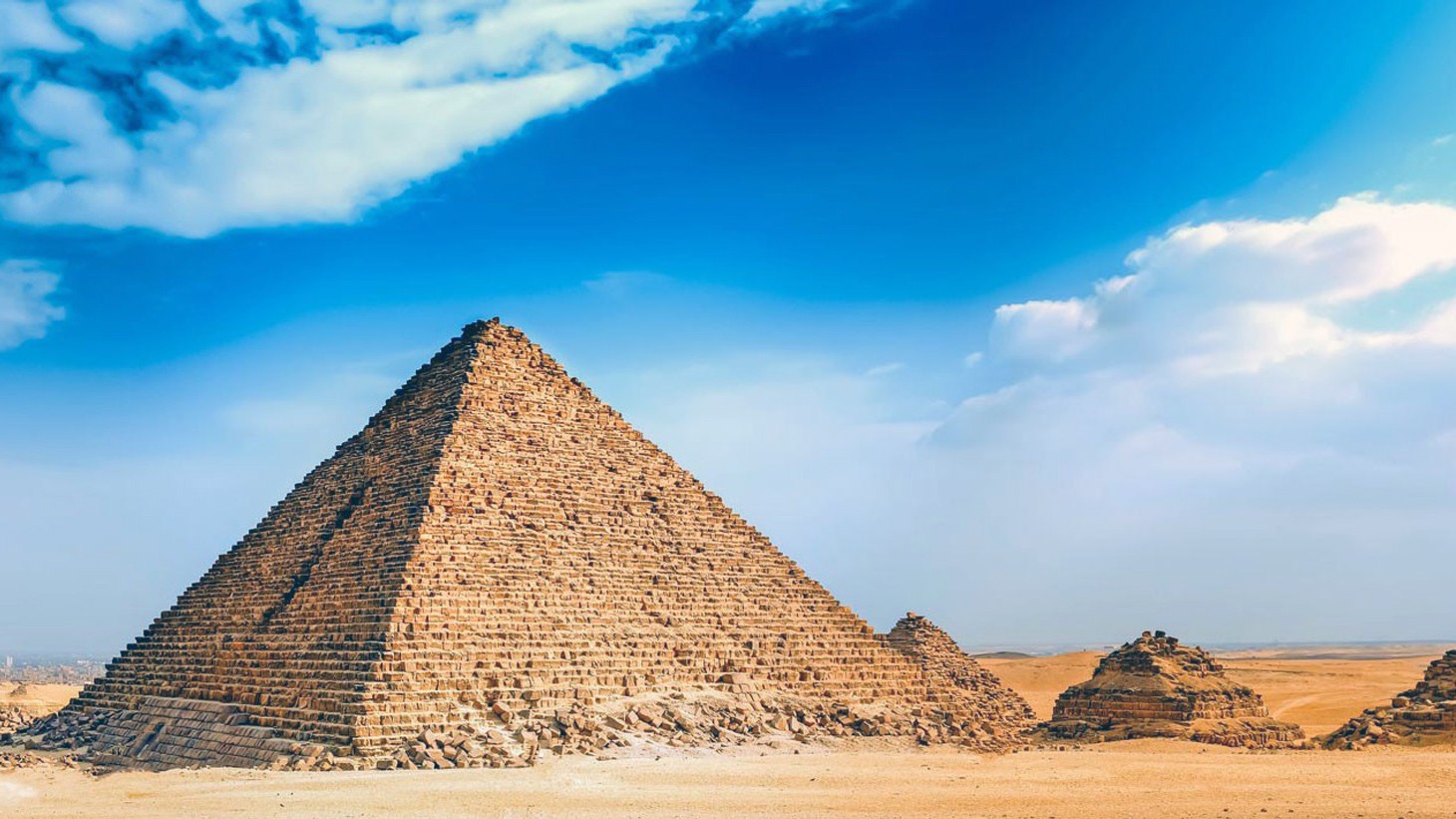
The last pyramid is the Pyramid of Menkaure, which today stands about 62 meters tall (originally around 65 meters). It is the smallest of the three, but it is the only one that still keeps part of its original red granite casing at the base. The interior of the structure is interesting for its ingenious security system. To confuse potential thieves, the pyramid was equipped with a false burial chamber, where a sarcophagus bearing Menkaure's name was placed.

The actual burial chamber is located below the foundation level and is accessed via a tunnel from the false chamber. The room is lined with granite and once contained the monarch's actual sarcophagus. However, it has not survived to this day, as the ship transporting it to Britain sank and the valuable relic remained forgotten at the bottom of the sea. The pyramid is complemented by a group of three smaller pyramids, which were supposed to be intended for the king's wives.
Most visitors staying on the Red Sea coast head to the pyramids on a day trip from Hurghada. By bus, it's about 450 km, or 5–6 hours each way.
Departure from the hotel is usually between midnight and 3 am, and you get back late in the evening. An organized tour costs roughly 60–100 EUR; pricier options also include the Grand Egyptian Museum. Entry to the Pyramid of Khufu is usually not included in the price.
Tip: Book the trip through your tour operator or a reputable agency, and take your passport with you, as there are checkpoints along the road.
You can also reach the pyramids from Sharm El Sheikh or Marsa Alam, but it's a long way. From Sharm El Sheikh it's about 530 km and over 7 hours by bus each way, and from Marsa Alam about 730 km and 8.5–10 hours. That would be very tiring for a single day, so plan on a two-day trip with an overnight stay in Cairo instead. If you're still choosing a hotel, take a look at the TOP 6 best hotels in Sharm El Sheikh or in Marsa Alam.
Marsa Matrouh on the Mediterranean coast is a different story. From there, Cairo is about 440 km away, a similar distance as from Hurghada. Tour operators and local agencies alike offer a full-day trip to the pyramids with an early departure and an evening return. A closer destination is Alexandria (about 290 km), which is offered as a separate trip. You can pick a hotel here from our overview of the TOP 6 best hotels in Marsa Matrouh.
 HurghadaTOP 6 best hotels
 Sahl HasheeshTOP 6 best hotels
 Sharm el SheikhTOP 6 best hotels
 Marsa AlamTOP 6 best hotels
 Marsa MatrouhTOP 6 best hotels
 For families with childrenTOP 6 best hotels
Only about 2 km from the pyramids stands the Grand Egyptian Museum (GEM). It was officially inaugurated on 1 November 2025 and has been open to the public since 4 November 2025.
For the first time, it displays Tutankhamun's complete collection – more than 5,000 objects. You can also see Khufu's solar boat, over 43 meters long, which used to stand right next to the pyramid, the Grand Staircase lined with statues of pharaohs, and the colossal statue of Ramesses II.
In addition to the pyramids, the complex also features a number of tombs which were intended for lower members of the royal family. Hidden beneath layers of sand are numerous architectural remains that further emphasized the glory and power of the Egyptian rulers. The pyramids at Giza will captivate you even today and help you understand the power that the Egyptian pharaohs wielded in their time. A visit to the pyramids is an unforgettable experience for everyone, because seeing the last classical wonder of the world is simply an experience of a lifetime.