If you want to visit Egypt mainly for its archaeological sites, you should focus your attention on one of the most impressive archaeological sites in all of Egypt, Abu Simbel.
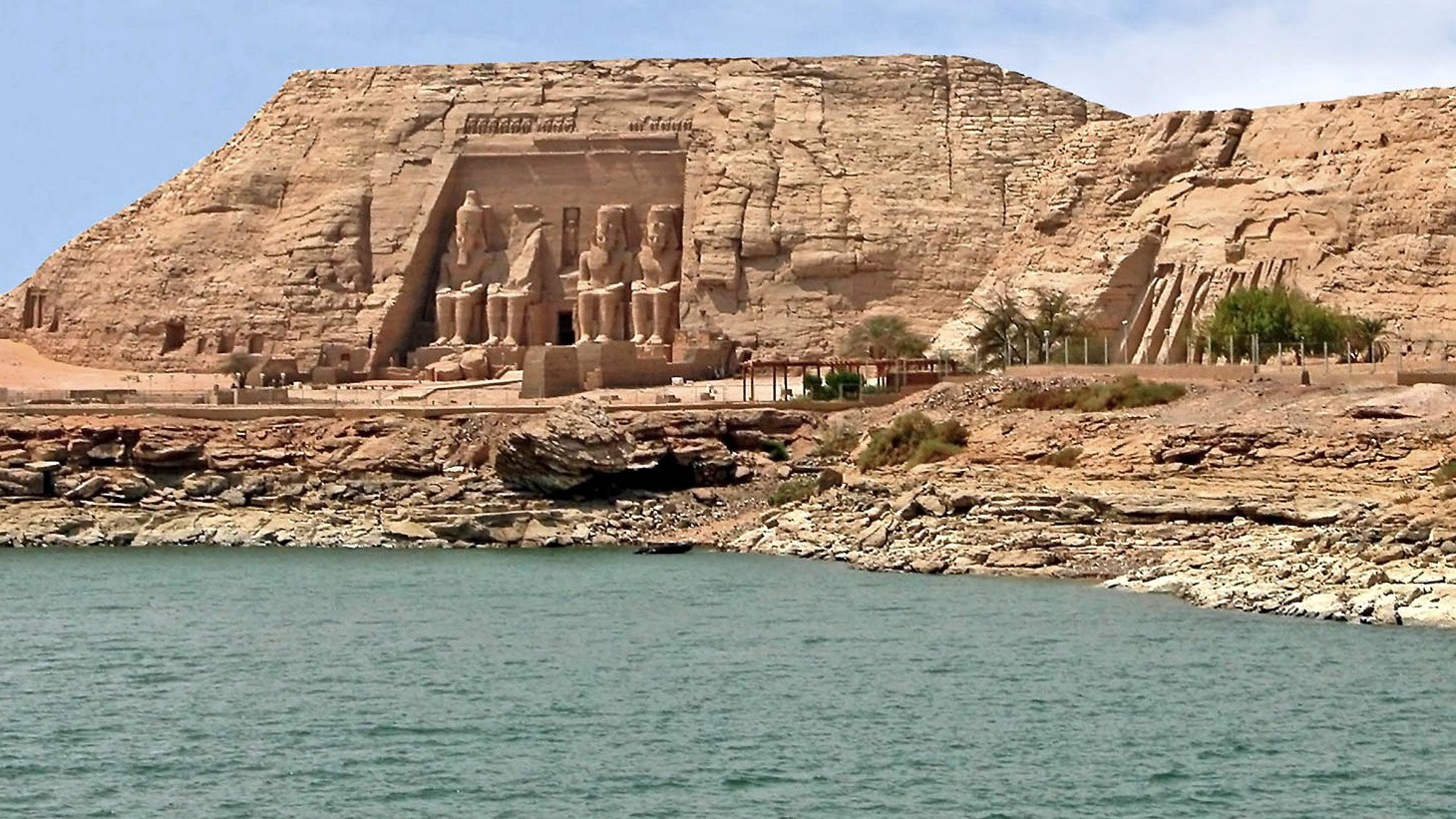
Abu Simbel is located in southern Egypt, about 300 kilometers from the historic city and former trading center of center of Aswan Many tourists plan their trips and visits to nearby attractions so that they first visit the sights and museums of Aswan and then set off on further excursions in the surrounding area. So what can you see in Abu Simbel?
The site offers two ancient temples dating back to the 13th century BC. The buildings are old. over 3,200 years and date back to the reign of Ramesses II. He had both temples carved into the local rock. The temples were to be dedicated to the most important gods of Upper and Lower Egypt, but since the pharaoh was not one to do things by halves, he added his own name to the divine pair.
As you walk around and marvel at the beauty of these ancient structures, it may not occur to you that the temples have not stood in their current location since ancient times, but only for a few decades. Many Egyptian monuments had to be moved due to the construction of the impressive Aswan Dam.

If you happen to be wandering around the area, you can include it in your travel plans. It is a truly colossal structure. The construction of the dam had an impact on raising the level of the Nile and some monuments had to be moved from their original historical locations to protect them from the water to other locations. Both temples were thus moved 200 meters west and 65 meters higher than their original location in the 1970s. The relocation of Abu Simbel is one of the most complex projects in contemporary archaeology.
The local monuments are listed as UNESCO World Heritage Sites and are among the most visited monuments in all of Egypt.
The entire temple complex was uncovered and properly mapped only in 1813, when Swiss traveler J. L. Burckhardt decided to remove the massive sand deposits under which both temples had been preserved. Originally, only the tops of the heads of the tallest statues protruded from the sea of sand.
The temples were very important in their time, as they represented a symbolic gateway to central Egypt. These megalomaniacal structures were originally situated facing the Nile, so that all who sailed by would be awestruck by the glory and power of Egypt. They were built from pinkish sandstone, which gave the buildings their unique color.
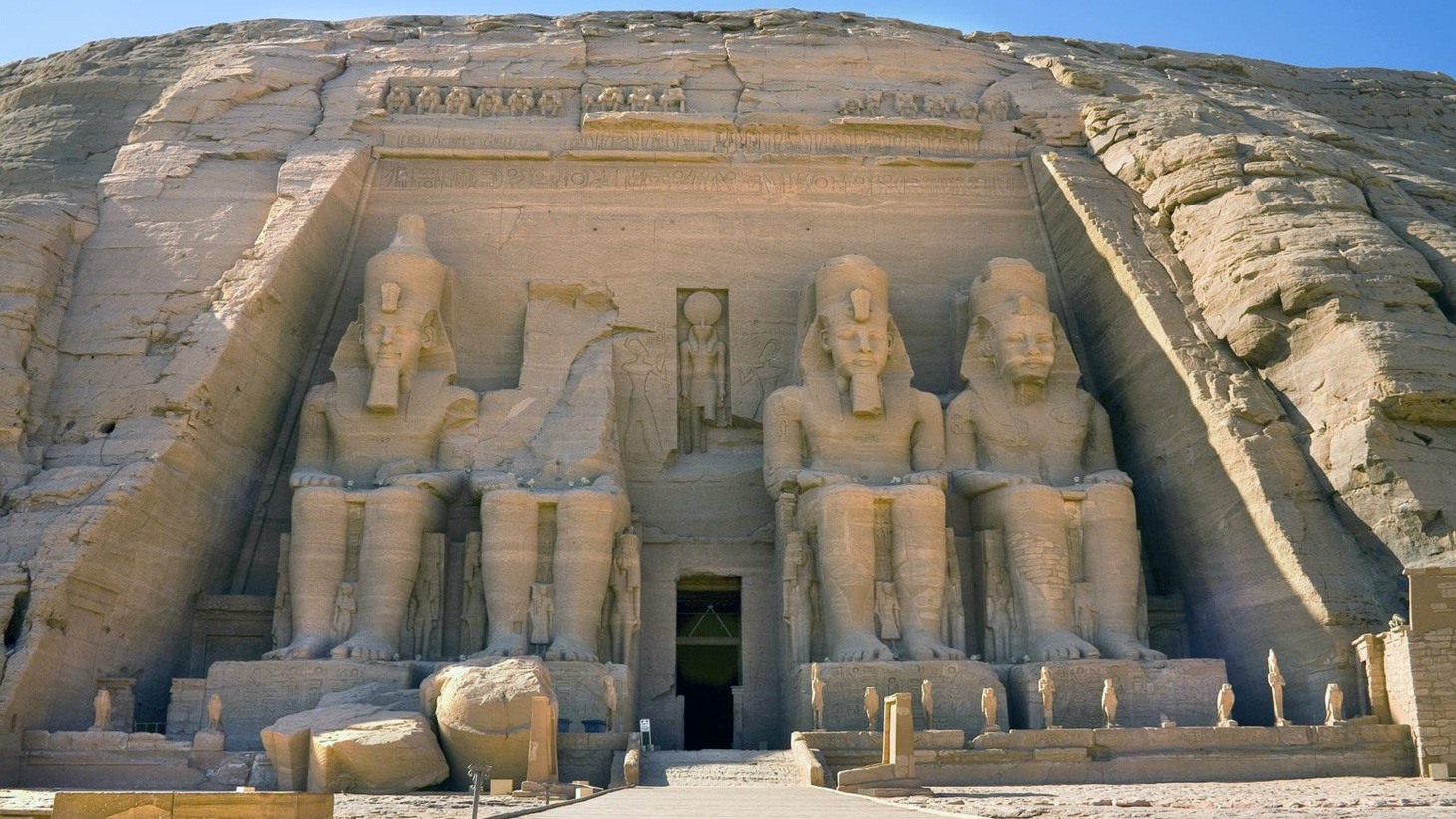
The larger of the temples, known as The Great Temple was dedicated to several deities and also to Ramesses II himself. The facade is complemented by four colossal statues depicting Ramesses II.

In addition to the statues themselves, which dominate the entire scene, upon closer inspection you may notice statues of baboons worshipping the rising sun, located at the top of the temple's facade. The feet of the colossi are complemented by other statues depicting other members of the royal family.
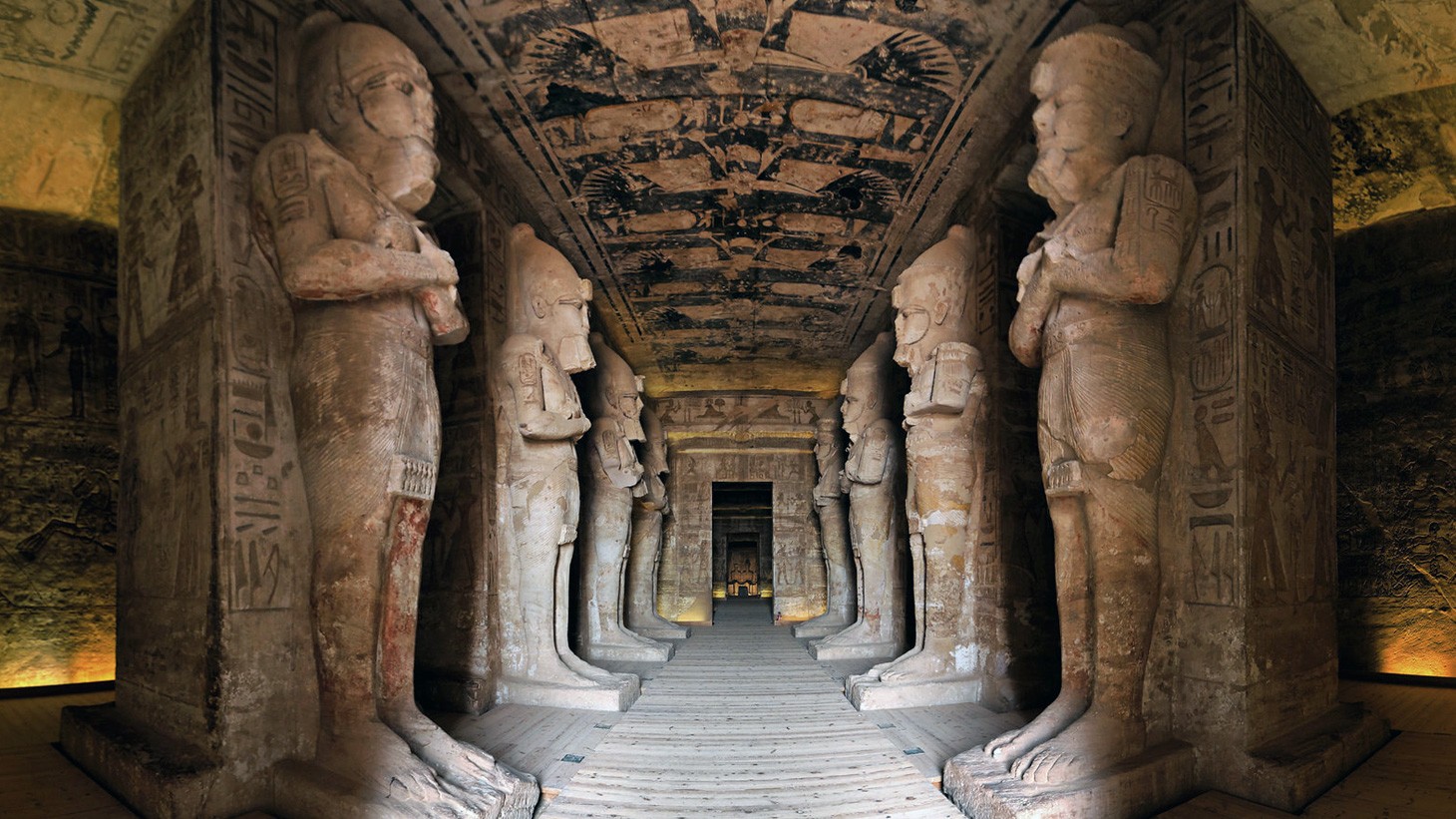
The interior of the temple will surprise you with its size. There you can see great hall with several statues and massive pillars or smaller chapel When exploring the interior of the temple, don't forget to look up at the ceiling, which is decorated with images of vultures with outstretched wings and hieroglyphics. The walls of the pillar hall are decorated with historical scenes from the wars fought by Ramesses.

The chapel at the rear of the temple houses several statues of gods. In connection with these statues, we should highlight the skill and ingenuity of the ancient engineers who built the temple so that the sun's rays reach this furthest room. It is located 65 meters deep inside the temple. However, this light show is not visible every day. The builders oriented the temple so that the rear chapel with the statues sunlight penetrated only twice a year, and only during the spring and fall equinoxes.
But that's not all. When the equinox occurs, the sun illuminates only some of the statues, and the statue of Ptah, the god of darkness, remains shrouded in darkness all year round. In their time, many Egyptians did not want to miss this spectacle and flocked here from all over Egypt to see the light show. We can still admire ancient architecture and attention to detail even today, in an age of technology and modern achievements.
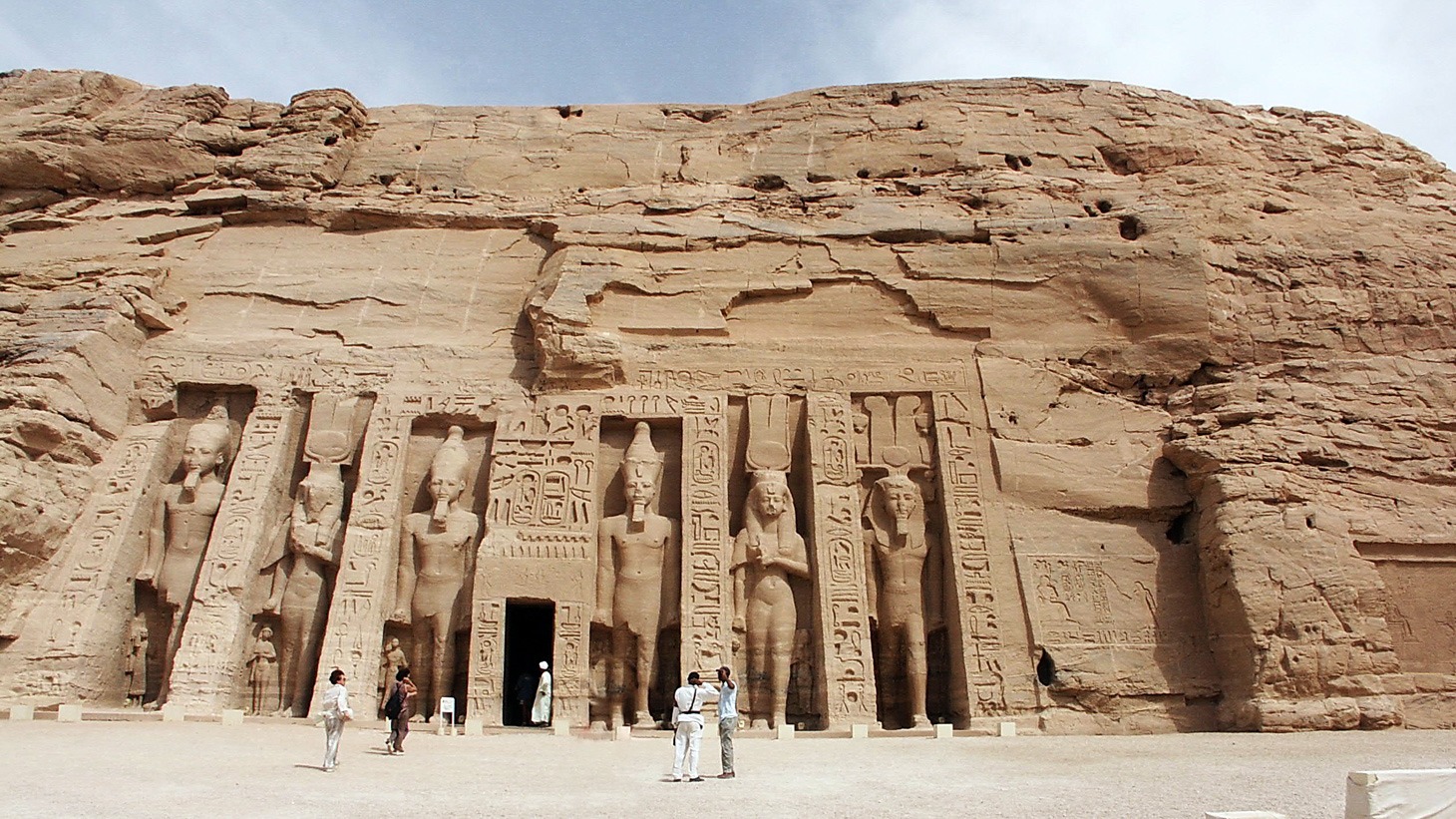
The second, smaller temple is dedicated to Ramesses' wife. Nefertari The temple is not as grandiose as her husband's, but it also has many interesting features.

The most interesting thing is the size of the statue of the queen herself, which is as tall as her husband. Such a depiction was truly unusual for its time, and the size of the statue thus draws attention to the enormous importance of the queen herself. At the time of its creation, it was the second Egyptian temple dedicated to a queen. The very first was built by Amenhotep for his wife Nefertiti.
The facade is decorated with numerous hieroglyphs listing all of the queen's titles. The most noteworthy of these is six ten-meter sculptures depicting the royal family, including the aforementioned statues of the king and queen, which are the same height.
The pillars inside the temple are decorated with scenes from the queen's life. You can see the queen playing the sistrum, King Ramesses holding a bouquet for the queen, and depictions of military campaigns where the king stands side by side with his queen. The temple's decoration is truly stunning, and upon closer inspection, you will realize the unusually strong position of the queen.
Abu Simbel is a place steeped in history, and the ancient atmosphere permeates every stone of the ancient buildings here. If you decide to visit the temple complex, you can be sure that you will take home with you you will take away many powerful experiences But who wouldn't want to see temples built by such a progressive ruler, who already in ancient Egypt treated his wife as his equal?
In addition, you can marvel at the technical level of both past and present construction, because the construction of the temple is just as impressive as its relocation, thanks to which we can still admire this pride of ancient architecture today.