Probably the most important thing before traveling abroad is making sure you have enough money to pay for things and won't get stuck somewhere without cash. What about Egyptian currency, ATM withdrawals, and prices in stores?
The currency unit is Egyptian pound (EGP or L.E.), which is equal to 100 piastres (P.T.). The name of this currency is a remnant of the British colonial period in Africa, and as a result, the Egyptian pound is denoted by the same symbol as the British pound (£).
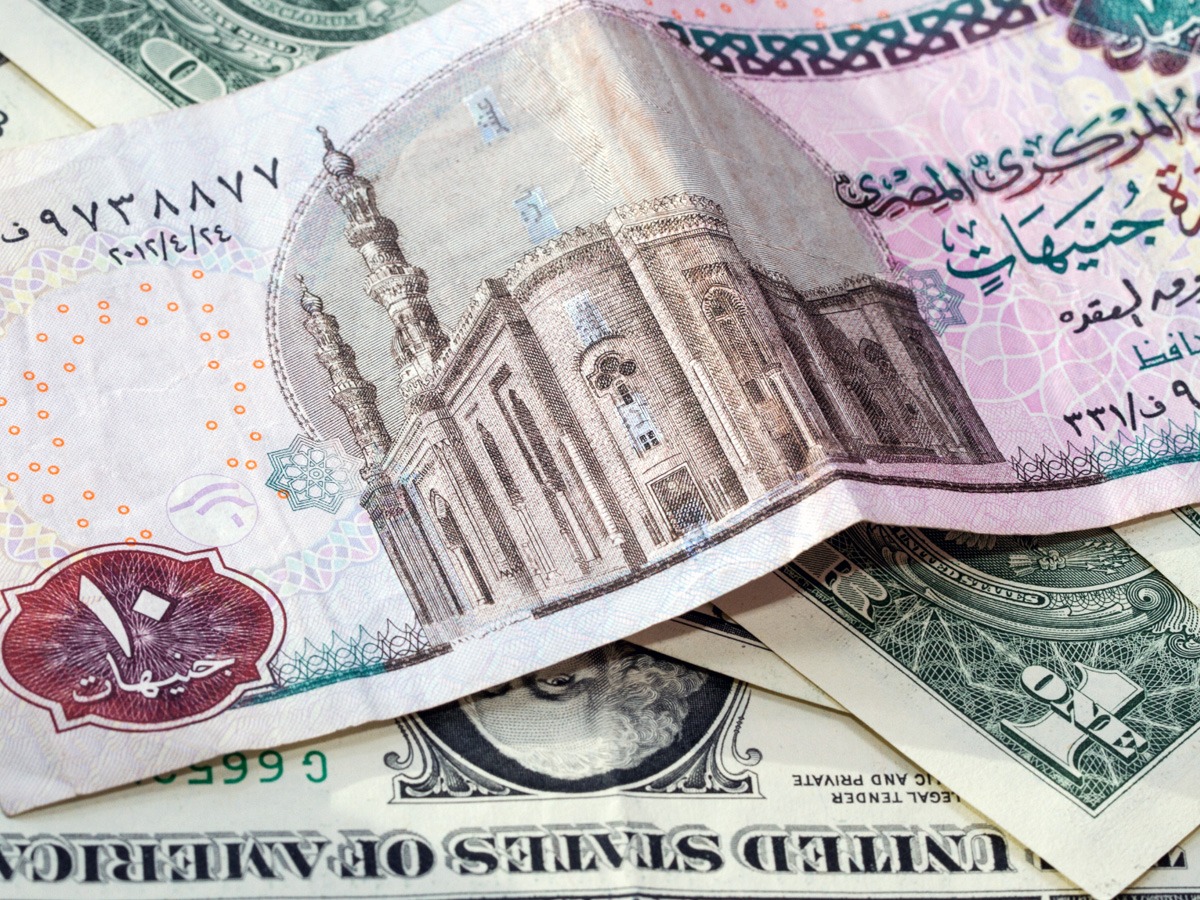
Banknotes are used in denominations of 200, 100, 50, 20, 10, 5, and 1 pound, and 50 and 25 piastres. Coins are available in denominations of 25, 20, 10, and 5 piastres.
1 Egyptian pound (EGP) = 0.42 CZK (09.10. 2026).
All currency exchange offices accept US dollars, euros, and British pounds, but not Czech crowns. Money can be exchanged at banks, official exchange offices, and most hotels. The best rates are usually offered at banks.
Banks are usually open Monday through Friday. They are closed on holidays and Sundays.
Due to tourism, very quickly develops a network of ATMs especially in the most visited areas such as , and others. Here, for a small fee, you can withdraw money from your account directly in Egyptian currency.
There isn't that much of a difference, as the dollar has a lower exchange rate than the euro, so if you give a tip of, say, $1 instead of a euro, you'll save a little money. Given that Egyptians want a tip for almost every service, we recommend exchanging dollars.
In Egypt, you pay a tip at every turn, which is a small amount, usually around a dollar or euro, for small services such as carrying luggage and similar activities, so It's good to always have small bills like this with you. If you travel with a travel agency and have booked "ALL INCLUSIVE," meaning free food and drink at the hotel, you will only need money for small gifts, excursions, or the aforementioned baksheesh.
It is recommended to take a safety reserve of around €300 per person per week in case of unexpected expenses. When traveling with a travel agency, you can expect to spend around €100 per person per week, mostly on hotel surcharges for drinks, tips, small items, etc.
When it comes to prices in Egypt, if you shop in historic centers or tourist resorts, are always higher than in villages or large supermarkets. Prices also vary depending on the products sold. When you buy a domestic product, it is always cheaper than an imported one, which is subject to high customs duties and taxes.
If you decide to go on a trip on your own, don't hesitate to order a taxi, as the prices are very reasonable compared to those in the Czech Republic.
Similar to Europe, it is customary in Egypt to tip in restaurants (usually around 10%) and for carrying luggage to the hotel (usually around 5-10 Egyptian pounds). Some guests have a habit of leaving money for cleaning their hotel room, which of course results in higher quality service (this can be around 15 pounds per week).
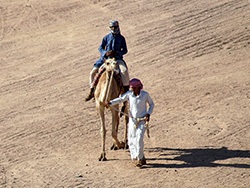
You will also be expected to tip small amounts to tourist attraction guards, taxi drivers, and felucca (sailboats with white triangular sails) ferrymen. Baksheesh, however, it can also take the form of a bribe. Some guests have a habit of discreetly placing $20 (or possibly 1,000 Egyptian pounds) on the table upon arrival at the hotel, saying that they would like a room with a nice sea view. Similarly, this also works in Egypt with hotel towels and many other things. However, it is entirely up to you whether you agree to this system of small bribes.
Bargaining is an integral part of Egyptian culture. Egyptians consider bargaining to be a sign of politeness and a matter of honor. That's why bargaining is always done everywhere except in stores with fixed prices, known as "fix price."
When bargaining, you can start calmly at the price two-thirds lower. You will probably get a fair amount, which is 50-70% of the original price.